Have you noticed a draft near your garage door, a line of daylight along the bottom, or water creeping in after a storm? These are classic signs that your garage door weather seal is worn out. The seal is easy to ignore because it sits quietly along the edges of the door, but it’s the first line of defense against rain, snow, wind, and debris.
At Alba Garage Doors, we see seal-related issues all the time, especially after harsh Illinois winters and wet springs. This guide explains what weather seals do, the warning signs of failure, and what to do before a small gap becomes a bigger garage door repair.
What Is a Garage Door Weather Seal?
A garage door weather seal is a flexible strip, usually rubber or vinyl, that closes the gaps around your door. Most doors have several seals working together:
- Bottom seal: Runs along the base of the door and meets the garage floor.
- Side seals (weatherstripping): Line the left and right edges of the door frame.
- Top seal: Runs across the header where the door meets the opening.
- Threshold seal: Sits on the floor and helps block water at the base.
When all of these are in good shape, they keep outdoor weather where it belongs. When even one is cracked, flattened, or missing, your garage door weather seal can no longer do its job.
Why Weather Seals Matter More Than You Think
A garage door is a large opening in your home. A weak seal turns that opening into a gateway for moisture, cold air, dust, leaves, and small pests.
Moisture is the biggest concern. Water that slips past a damaged seal can sit on the floor, collect in the tracks, and encourage rust on metal parts. That extra wear can affect your garage door springs, rollers, and hinges. A good seal also keeps your garage more comfortable and cleaner through every season.
Signs of Garage Door Weather Seal Problems
Catching seal trouble early is simple if you know what to look for. Here are the most common warning signs.
1. Daylight Showing Around the Door
Close the door and look at it from inside on a bright day. If you see light along the bottom or sides, there’s a gap. Light means air, water, and pests can get through too.
2. Drafts and Temperature Swings
If your garage feels icy in winter or stuffy in summer, air may be leaking through damaged seals. Drafts are often the first thing homeowners notice.
3. Water Pooling Near the Door
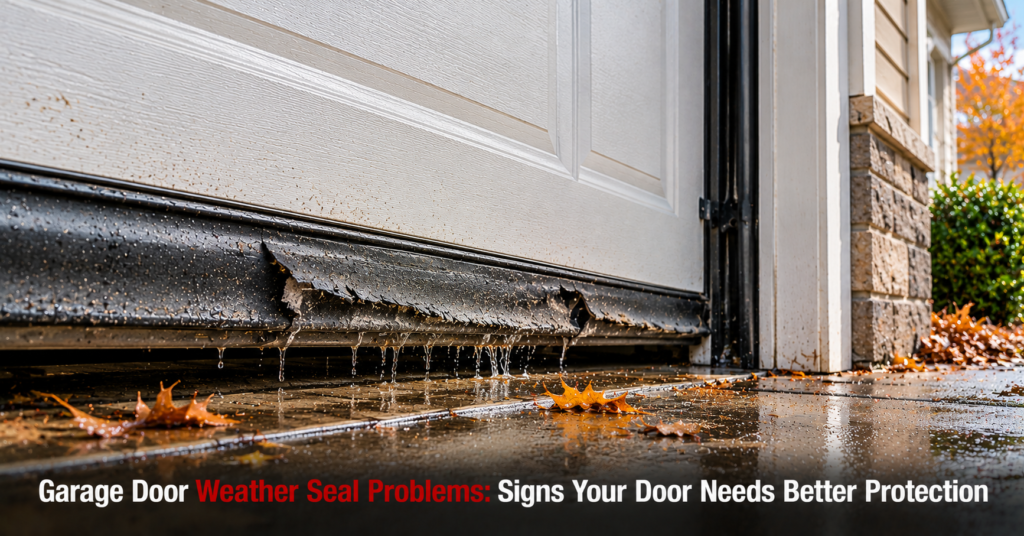
Puddles along the base after rain or melting snow are a clear sign the bottom seal isn’t sealing against the floor. Water can also run along the door’s edges and drip inside.
4. Cracked, Brittle, or Flattened Rubber
Over time, sun, cold, and constant movement take their toll. A healthy seal is soft and springy. A failing one looks cracked, hardened, torn, or pressed flat.
5. Seals Hanging Loose or Pulling Away
If the strip has come out of its retainer track or is dragging on the ground, it can’t form a tight barrier. A loose seal can also catch as the door moves.
6. Pests, Leaves, and Debris Inside the Garage
Insects, mice, leaves, and dirt slip in through the smallest gaps. If you keep finding them in your garage, a worn seal may be the entry point.
7. Frozen or Sticking Door in Winter
A damaged seal can let moisture gather along the bottom edge, where it freezes the door to the floor. If your door sticks on cold mornings, forcing it open can strain your garage door opener and other parts.
8. Rust or Moisture Damage Nearby
Rust spots along the bottom panel, tracks, or hardware can point to a seal that’s letting too much water in.
What Causes a Garage Door Weather Seal to Wear Out?
Seals don’t last forever. These are the usual culprits:
- Illinois temperature swings: Rubber hardens in freezing weather and softens in heat, which leads to cracks over time.
- Sun exposure: UV light dries out and splits the material.
- Road salt and moisture: Winter salt and constant dampness speed up breakdown.
- Daily use: Every time the door closes, the seal is pressed against the floor.
- Uneven floors or misaligned doors: If the door doesn’t sit evenly, one section of the seal wears faster.
- Age: Even a well-made seal eventually needs replacing.
How to Check Your Garage Door Weather Seal
A quick inspection takes only a few minutes:
- Close the door fully and turn off the garage lights.
- Have someone shine a flashlight along the edges from outside while you look for light leaks inside.
- Run your hand along the bottom seal. It should feel flexible, not stiff or crumbly.
- Look for cracks, tears, flat spots, or sections that have shifted out of place.
- Check where the seal meets the floor, and look for water marks or debris.
Do this a couple of times a year, ideally before winter and after spring storms.
Common Mistakes Homeowners Make
Ignoring small gaps. A thin line of light may seem harmless, but it grows over time and lets in more moisture.
Using the wrong type of seal. Seals come in different shapes and sizes. A poor fit leaves gaps even when the seal is new.
Patching with temporary fixes. Tape or sealant often peels and doesn’t solve the underlying problem.
Forcing a frozen door open. Pulling on a door stuck to the floor can damage the seal, panels, and opener.
Overlooking misalignment. If the door isn’t level or balanced, even a new seal won’t sit properly. In that case, a garage door repair may be needed to correct the cause.
Skipping regular inspections. Seal problems build slowly, so they’re easy to miss until water or pests show up.
Expert Tips to Protect Your Garage Door
- Keep the bottom seal clean by wiping away dirt, salt, and debris.
- Clear snow and ice from the base of the door before closing it.
- Check the seal each season, especially before winter.
- Make sure the door closes evenly and fully against the floor.
- Watch for other warning signs, like noise or uneven movement, which may point to hardware trouble.
- Schedule professional garage door maintenance so a technician can inspect seals along with springs, cables, rollers, and the opener.
When to Call a Professional
Replacing a weather seal can look simple, but the right fit matters. A technician can measure your door, choose the correct seal, and confirm the door closes squarely. They can also tell whether the real issue is the seal or something deeper, such as worn rollers, misaligned tracks, or a door that has shifted.
If your seals are damaged and the door is also noisy, slow, or uneven, it’s wise to have the whole system checked. In some cases, an older door with repeated seal and hardware problems may be better served by a new garage door installation.
Serving Homeowners Across the Chicagoland Suburbs
Alba Garage Doors helps homeowners keep their garage doors protected and running smoothly throughout the region, including Vernon Hills, Lake Zurich, Wauconda, and Carpentersville. Whether you need a seal inspection, a repair, or a full system check, our technicians can help you find the right solution.
Frequently Asked Questions
How do I know if my garage door weather seal needs replacing?
Look for daylight around the door, drafts, water pooling, or seals that are cracked, flattened, or loose. Any of these signs means the seal is no longer working well.
How long does a garage door weather seal last?
It depends on the material, weather exposure, and how often the door is used. Illinois winters and summer sun can shorten a seal’s life, so regular inspection is the best guide.
Can a damaged weather seal affect other parts of my garage door?
Yes. Moisture that gets past a worn seal can cause rust on tracks, hinges, and hardware, which may put extra strain on your springs and opener.
Why does my garage door freeze to the ground in winter?
Moisture collects along the bottom edge and freezes, often because the seal is worn or the floor isn’t draining well. Avoid forcing the door open and call a technician if it keeps happening.
Can I replace a garage door weather seal myself?
Some homeowners handle basic seal swaps, but getting the right size and fit is important. A professional can make sure the door closes evenly, and the seal does its job.
Final Thoughts
A small strip of rubber plays a big role in protecting your garage. When a garage door weather seal wears out, it opens the door to drafts, water, rust, and pests. Checking your seals a few times a year, cleaning them, and replacing them at the first signs of damage helps your whole garage door system last longer. If you spot any of the warning signs above, a quick inspection now can head off a larger garage door repair later.
Contact Alba Garage Doors
If your garage door is making unusual noises, struggling to open, or needs professional repair or replacement, the team at Alba Garage Doors is here to help. We provide trusted garage door repair, garage door spring replacement, garage door opener repair, emergency garage door service, and garage door installation throughout Illinois.
Our experienced technicians proudly serve homeowners in Cary, Lake in the Hills, Algonquin, Schaumburg, Elgin, Libertyville, McHenry, Round Lake, Fox Lake, Antioch, Vernon Hills, and many surrounding communities.
Call us today for fast and reliable garage door service.
Phone: (847) 596-0902
Website: www.albagaragedoors.com
Summary
Garage door weather seal problems show up as drafts, gaps of light, water pooling, cracked or flattened rubber, and pests entering. A worn garage door weather seal lets moisture and cold air in. Inspect seals regularly, clean them, and call a professional for repair or replacement when damage appears.