Most people don’t think about their garage door until something feels wrong. It’s easy to assume that if a door still opens and closes, it must be fine. But a garage door can look normal and still be unsafe underneath.
Since a garage door can weigh several hundred pounds and moves right past where kids, pets, and cars pass through every day, it’s worth knowing how to check it properly. The tests below take just a few minutes, and they’ll tell you a lot more than a quick glance ever could.
At Alba Garage Doors, safety checks like these are the first thing our technicians run through on every service call. Here’s how to do the same checks yourself, and how to know when it’s time to stop using the door and call for help.
Why Garage Door Safety Checks Matter
A garage door has more moving parts than most people realize. Springs, cables, sensors, and an opener all work together every time the door cycles. If even one part is worn or misaligned, the whole system can behave unpredictably.
Most garage door injuries happen because a small warning sign was missed for weeks or months. A short safety check now can catch these issues before they turn into a real accident.
7 Ways to Tell If Your Garage Door Is Safe to Use
1. Do the Auto-Reverse Safety Test
Every modern garage door opener has a feature that reverses the door if it senses resistance while closing. To test it, place a roll of paper towels or a piece of wood flat on the ground where the door closes. Trigger the door to close normally. It should reverse immediately after touching the object. If it doesn’t, stop using the door right away and have the opener inspected.
2. Check the Photo-Eye Sensors
Look at the two small sensors near the bottom of each track, roughly six inches off the ground. Wave your hand through the beam while the door is closing. It should stop and reverse. If it keeps closing anyway, the sensors aren’t working correctly, and this is a safety issue that needs attention.
3. Perform a Manual Balance Test
Close the door, then disconnect the opener using the manual release cord. Lift the door about halfway by hand and let go. A properly balanced door should stay roughly in place. If it falls or shoots upward, the springs are likely worn or unbalanced, which means the door isn’t safe to keep using as-is.
4. Listen for Unusual Noises
Run the door through a full open-and-close cycle and just listen. Grinding, popping, or loud banging sounds usually point to a mechanical problem, often in the springs, rollers, or track. A healthy door should move with a smooth, consistent hum.
5. Inspect the Springs and Cables
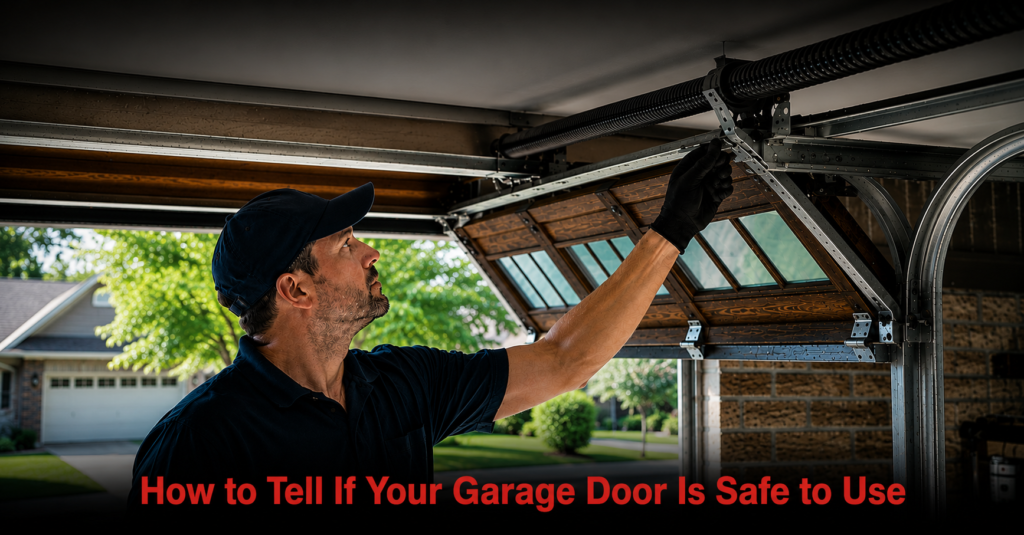
Take a look at the springs above the door and the cables running along each side. Watch for rust, visible gaps between coils, fraying, or looseness. These parts carry enormous tension, and any visible damage is a sign the door should not be used until it’s checked by a professional.
6. Watch How the Door Moves
Stand back and watch the full cycle. The door should move evenly on both sides, without tilting, jerking, or pausing partway through. Uneven movement usually means one side is under different tension than the other, which is a common precursor to sudden failure.
7. Check the Emergency Release Function
Every opener has a manual release, usually a red cord hanging from the trolley. Make sure you know where it is and that it works. In a power outage or opener failure, this is what lets you open the door safely by hand.
Signs Your Garage Door Is NOT Safe to Use
Stop using the door immediately and call a professional if you notice any of the following:
- A visible gap or bend in one of the springs
- A frayed, rusted, or loose cable
- The door reverses or stalls at random points
- A loud bang followed by the door feeling heavier
- The door falls quickly during the manual balance test
- The auto-reverse or sensor test fails
Any one of these on its own is enough reason to hold off on using the door until it’s inspected.
How Often Should You Test Your Garage Door’s Safety?
A quick safety check once a month takes just a few minutes and catches most problems early. A full professional inspection once a year is a good baseline for most homes, and it’s worth doing sooner if you’ve noticed any new noise, hesitation, or uneven movement.
Common Mistakes People Make When Checking Garage Door Safety
- Assuming it’s fine because it still opens and closes. A door can operate and still be unsafe.
- Skipping the auto-reverse test. Many homeowners have never actually tested this feature.
- Ignoring a single strange noise. One noise is often the earliest warning sign available.
- Trying to adjust springs or cables personally. These parts store dangerous tension and need a trained technician.
- Letting kids or pets near the door during testing. Always keep the area clear while running these checks.
Expert Tips for Keeping Your Garage Door Safe Year-Round
- Run the auto-reverse and sensor tests monthly.
- Keep the sensor lenses clean and free of dust or cobwebs.
- Lubricate rollers, hinges, and springs twice a year.
- Watch for rust after winter, especially if road salt tracks into the garage.
- Schedule a professional inspection annually, even if nothing seems wrong.
When to Call a Professional
Cleaning sensors and running the tests above are safe for any homeowner. But if a test fails, or you spot damage to a spring or cable, that’s not a DIY repair. These components are under constant tension and can cause serious injury if handled without training. A licensed technician can diagnose the issue and make the repair safely.
Serving Homeowners in Lake Zurich, Antioch, Wauconda, and Round Lake
Homeowners in Lake Zurich, Antioch, Wauconda, and Round Lake regularly reach out for safety inspections, especially after noticing a new noise or a failed sensor test. A same-day visit is often all it takes to confirm whether a door is safe to keep using or needs repair.
Frequently Asked Questions
How do I know if my garage door spring is dangerous?
Look for visible rust, gaps between coils, or stretching. If the spring looks damaged in any way, avoid using the door until it’s inspected.
Is it safe to use a garage door that makes noise?
Not for long. Noise is often the first sign of a mechanical issue, and continuing to use the door can make the problem worse.
What should I do if the auto-reverse test fails?
Stop using the opener and have it inspected. This safety feature exists specifically to prevent injury, and it should never be skipped or ignored.
How long does a garage door safety check take?
Most of these tests take less than ten minutes total and only require things you already have at home.
Can a garage door fail even if it looks fine?
Yes. Many failures start with parts that look normal on the surface but are worn or unbalanced underneath, which is exactly why these tests matter.
Contact Alba Garage Doors
If your garage door is making unusual noises, struggling to open, or needs professional repair or replacement, the team at Alba Garage Doors is here to help. We provide trusted garage door repair, garage door spring replacement, garage door opener repair, emergency garage door service, and garage door installation throughout Illinois.
Our experienced technicians proudly serve homeowners in Cary, Lake in the Hills, Algonquin, Schaumburg, Elgin, Libertyville, McHenry, Woodstock, Round Lake, Fox Lake, Antioch, Vernon Hills, Barrington, and many surrounding communities.
Call us today for fast and reliable garage door service.
Phone: (847) 596-0902
Website: www.albagaragedoors.com
Final Thoughts
A garage door doesn’t need to look broken to be unsafe. Testing the sensors, checking the balance, and inspecting the springs and cables gives you a clear picture in just a few minutes, far more reliable than assuming everything is fine because the door still moves.
If any of these checks raise a red flag, don’t keep using the door as-is. Reach out to Alba Garage Doors for a full inspection, and get the peace of mind that comes with knowing your garage door is actually safe.
Summary
To check if a garage door is safe, test the auto-reverse feature, inspect the photo-eye sensors, and run a manual balance test by lifting the door halfway. Watch for rust, frayed cables, or uneven movement. Any failed test or visible damage means the door needs a professional garage door repair inspection before further use.