Rollers are one of the smallest parts on your garage door, and one of the most overlooked. They’re not as talked about as springs or openers, but they do a lot of quiet work every time your door moves. When they start to wear down, the signs are usually subtle at first, then hard to ignore.
If your garage door has started sounding different or moving a little rougher than it used to, worn rollers are one of the most common reasons why. Here’s what actually happens as they wear down, and why it’s worth addressing sooner rather than later.
At Alba Garage Doors, roller wear is one of the easiest issues for our technicians to spot, often before a homeowner even mentions a noise. Here’s what to watch for and what tends to happen if it’s left alone.
What Do Garage Door Rollers Actually Do?
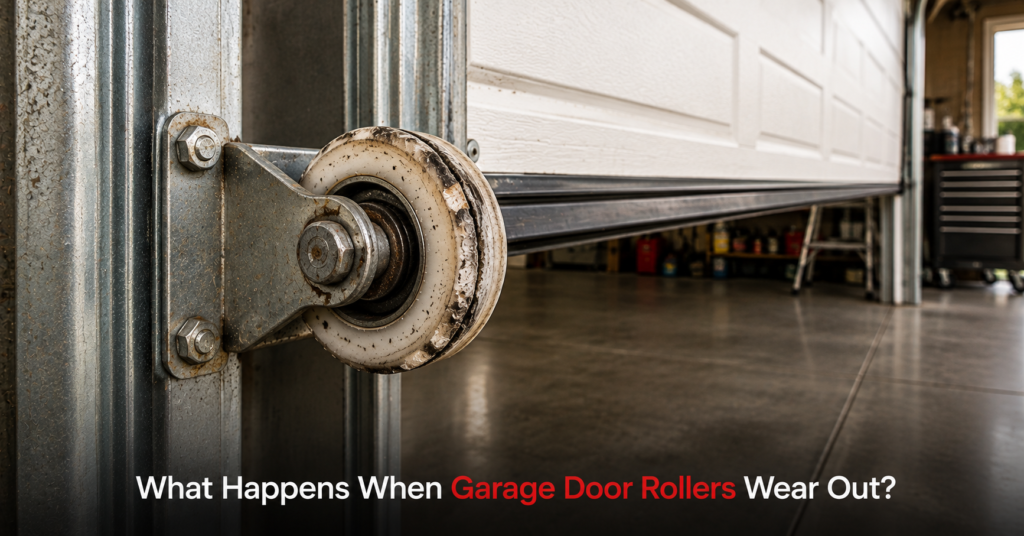
Rollers sit inside the metal tracks on either side of your garage door and guide it smoothly up and down as it opens and closes. Every panel is connected to a set of rollers, and together they carry the door’s weight along its path. When they’re in good shape, you barely notice them. When they wear out, you notice almost everything.
What Happens When Garage Door Rollers Wear Out?
1. Grinding or Squealing Noises
This is usually the first sign. A rough or damaged roller creates friction against the track instead of rolling smoothly, which produces a grinding or squealing sound during operation.
2. Jerky or Uneven Movement
Worn rollers don’t glide the way they should. The door may start to move in small jerks or hesitate briefly at certain points, especially where a roller has flat spots or cracks.
3. The Door Slows Down Mid-Cycle
As friction builds from worn rollers, the opener has to work harder to keep the door moving. This can cause the door to visibly slow down partway through opening or closing.
4. Increased Strain on the Opener
Rollers and the opener work as a team. When they create extra resistance, the motor takes on more strain than it’s designed for, which can shorten its lifespan over time.
5. Visible Wobbling or Shaking
Watch the door closely during a cycle. Worn or loose rollers often cause a visible wobble or shake, especially near the section of track where the wear is worst.
6. The Door Comes Off Track
In more advanced cases, a badly worn or broken part can allow the door to slip partially or fully off its track. This is a serious safety issue and usually stops the door from moving at all.
7. Cracked or Chipped Rollers
Nylon versions can crack or chip as they age, while steel ones tend to rust or flatten on one side. Either way, a damaged roller no longer moves evenly, which affects everything else connected to it.
8. Faster Wear on Tracks and Hinges
This kind of wear rarely stays isolated. The extra friction and uneven movement it causes puts added stress on the tracks and hinges nearby, often leading to a bigger repair if the rollers aren’t replaced in time.
Steel vs. Nylon Rollers: Which Wears Out Faster?
Steel rollers are durable but noisier, and they’re more prone to rust, especially with road salt exposure during Illinois winters. Nylon rollers run quieter and don’t rust, but the material itself wears down gradually with age and heavy use. Neither type lasts forever, and both eventually need replacement.
How Long Do Garage Door Rollers Actually Last?
Most rollers last between 7 and 10 years under normal daily use, though doors that cycle more often, like in a busy household, may see wear sooner. Regular lubrication and a smooth, well-aligned track can help rollers last closer to the higher end of that range.
Is It Dangerous to Keep Using Worn Rollers?
It becomes more dangerous the longer it’s ignored. Early on, worn rollers mostly cause noise and rough movement. Left unaddressed, they can lead to a door that shakes badly, strains the opener, or comes off its track entirely, all of which raise the risk of a sudden failure or injury.
Common Mistakes Homeowners Make
- Ignoring a new noise. A squeal or grind is often the very first sign of roller wear.
- Only lubricating the springs. Rollers need regular lubrication too, and are easy to forget.
- Waiting until the door wobbles badly. Early replacement is simpler and less expensive than waiting for a full failure.
- Assuming it’s always the opener. Many “opener problems” actually start with worn rollers creating extra resistance.
- Replacing only the worst rollers. Rollers tend to wear at a similar pace, so replacing them as a set often makes more sense than one at a time.
Expert Tips to Extend Roller Life
- Lubricate rollers every few months with a silicone-based garage door lubricant.
- Keep the tracks clean and free of dirt or debris.
- Have the door’s alignment checked annually, since misaligned tracks accelerate roller wear.
- Address unusual noises early rather than waiting for them to worsen.
- Consider nylon rollers if you’re replacing steel ones, especially in homes with attached garages.
When to Call a Professional
Cleaning tracks and applying lubricant are simple homeowner tasks. But actual roller replacement involves working near spring tension and should be handled by a trained technician. This keeps the repair safe and ensures the new rollers are properly seated in the track.
Serving Homeowners in Deer Park, Kildeer, Hampshire, and Lake Villa
Homeowners in Deer Park, Kildeer, Hampshire, and Lake Villa often call in once they notice a new grinding sound or a door that’s started to wobble. In most cases, a quick inspection confirms whether it’s the rollers, and replacement can usually be completed the same day.
Frequently Asked Questions
How do I know if it’s the rollers and not the opener?
If the door makes noise or moves roughly even when operated manually, without the opener engaged, the issue is likely mechanical, pointing to the rollers or track rather than the opener.
Can worn rollers cause the door to fall?
Rollers themselves don’t typically cause a full fall, but they can allow the door to come off its track, which creates its own serious safety risk.
Are nylon rollers better than steel rollers?
Nylon rollers run quieter and resist rust better, which makes them a popular upgrade, though steel rollers are more durable under heavy daily use.
How often should garage door rollers be replaced?
Most rollers last 7 to 10 years, though this varies based on usage, maintenance, and whether the door cycles frequently throughout the day.
Can I replace garage door rollers myself?
It’s possible for some roller types, but the door needs to be properly secured and supported during the process. Many homeowners prefer to have this done by a professional to avoid injury.
Contact Alba Garage Doors
If your garage door is making unusual noises, struggling to open, or needs professional repair or replacement, the team at Alba Garage Doors is here to help. We provide trusted garage door repair, garage door spring replacement, garage door opener repair, emergency garage door service, and garage door installation throughout Illinois.
Our experienced technicians proudly serve homeowners in Cary, Lake in the Hills, Algonquin, Schaumburg, Elgin, Libertyville, McHenry, Woodstock, Round Lake, Fox Lake, Antioch, Vernon Hills, Barrington, and many surrounding communities.
Call us today for fast and reliable garage door service.
Phone: (847) 596-0902
Website: www.albagaragedoors.com
Final Thoughts
Worn garage door rollers rarely cause a dramatic failure right away. Instead, they show up as a new noise, a slight wobble, or a door that just doesn’t move the way it used to. Catching these signs early keeps the fix simple and protects the rest of the door’s moving parts from extra wear.
If your garage door has started sounding rougher or moving less smoothly, don’t wait for it to get worse. Reach out to Alba Garage Doors for an inspection, and get your rollers checked before they turn into a bigger repair.
Summary
When garage door rollers wear out, they cause grinding noises, jerky movement, visible wobbling, and added strain on the opener. Left unaddressed, worn rollers can lead to the door slipping off its track. Regular lubrication and early roller replacement by a professional garage door repair technician help prevent further damage.