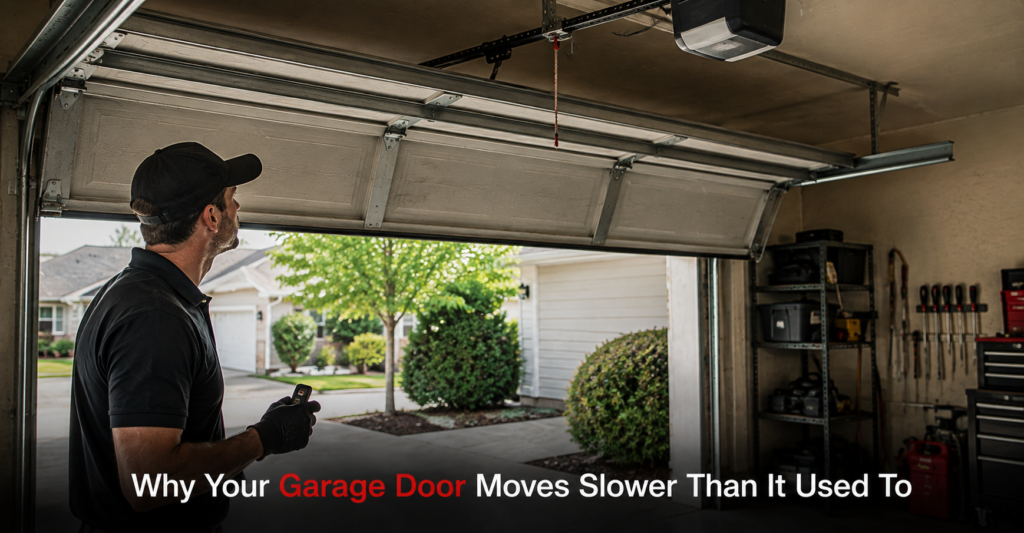
You’ve probably noticed it without really thinking about it. The door used to snap open and shut in a few seconds. Now it takes noticeably longer, moving with a bit of a drag instead of its usual pace.
A garage door slowing down doesn’t always mean something is broken. Sometimes it’s a simple fix. Other times, it’s an early warning sign worth paying attention to. Either way, it’s not something to ignore completely, since a change in speed almost always means something in the system has changed too.
At Alba Garage Doors, this is one of the more common questions we hear from homeowners. Here’s what usually causes it, and how to tell whether it’s a quick fix or something that needs a closer look.
Is It Normal for a Garage Door to Slow Down Over Time?
To some degree, yes. Every moving part wears down eventually, and a slight change in speed can simply be normal aging. But a noticeable slowdown, especially if it happened somewhat suddenly, usually points to a specific cause rather than general wear alone.
Common Reasons Your Garage Door Moves Slower Than It Used To
1. Weakening Springs
Springs do most of the heavy lifting, and as they lose tension over time, the opener has to work harder to compensate. This extra effort often shows up as a slower, more labored movement, especially during the first few feet of opening.
2. Worn Rollers or Dirty Tracks
Rollers that are worn, or tracks that have collected dirt and grime create friction that slows the door’s path. This is one of the more common causes and also one of the easiest to check yourself.
3. Aging Opener Motor
Like any motor, the one inside your opener loses some of its power with age. If the door has generally slowed down across its entire cycle, rather than just part of it, an aging motor is often the reason.
4. Low or Dried-Out Lubrication
Rollers, hinges, and tracks all rely on lubrication to move smoothly. Once it dries out or wears thin, everything works a little harder, and that added resistance often translates directly into a slower door.
5. Opener Speed Settings Changed
Many modern openers have adjustable speed settings, and these can sometimes shift due to a reset, a power outage, or an accidental setting change. It’s worth checking your opener’s manual to confirm the current speed setting before assuming something is broken.
6. A Struggling Drive Belt or Chain
The belt or chain that actually moves the door along the opener’s rail can stretch, fray, or loosen over the years. A worn belt or chain often causes a slower, less consistent movement, sometimes paired with a rattling sound.
7. Cold Weather Effects
Cold temperatures thicken lubricant and stiffen certain materials, which can slow a garage door temporarily during winter months. If the slowdown happens mainly in cold weather and improves once it warms up, this is likely the cause.
8. Added Weight or Door Modifications
Extra insulation, a heavier replacement panel, or added hardware can shift the door’s overall weight. If the springs and opener were calibrated for the original setup, added weight can cause a noticeable drop in speed.
Is a Slow Garage Door Dangerous?
Not usually on its own, but it’s worth investigating rather than ignoring. A slowdown caused by weakening springs, for example, can eventually progress to a door that’s difficult to lift or unsafe to use. Catching the cause early keeps a minor annoyance from becoming a bigger repair.
Quick Checks Before Calling a Professional
- Watch whether the slowdown happens throughout the entire cycle or just part of it.
- Check whether it’s worse in cold weather.
- Look at the tracks for visible dirt, debris, or rust.
- Confirm the opener’s speed setting hasn’t changed.
- Listen for any new noise accompanying the slower movement.
These details help narrow down the cause quickly, whether you’re troubleshooting yourself or describing the issue to a technician.
Common Mistakes Homeowners Make
- Assuming it will fix itself. A slowdown usually has a specific cause that won’t resolve without attention.
- Only lubricating once and forgetting about it. Lubrication needs to be reapplied every few months to stay effective.
- Ignoring a slowdown paired with a new noise. Together, these often point to a bigger mechanical issue.
- Adjusting opener settings without knowing the cause. This can mask a real problem instead of solving it.
- Waiting until the door is very slow to address it. Early attention usually means a simpler, less expensive fix.
Expert Tips to Keep Your Garage Door Moving at Full Speed
- Lubricate rollers, hinges, and tracks twice a year.
- Keep the tracks clean and free of debris.
- Have spring tension checked annually, since gradual weakening is easy to miss day to day.
- Inspect the drive belt or chain periodically for fraying or looseness.
- Address any new noise or hesitation as soon as you notice it.
When to Call a Professional
Cleaning tracks and applying lubricant are safe for most homeowners to try first. But if the slowdown continues, involves the springs, or comes with a new noise, it’s time for a professional inspection. A technician can pinpoint the exact cause rather than guessing, which usually saves both time and money.
Serving Homeowners in Fox River Grove, Island Lake, North Barrington, and South Barrington
Homeowners in Fox River Grove, Island Lake, North Barrington, and South Barrington often notice this exact issue, a door that’s gradually lost its usual pace. Most of the time, a quick inspection identifies the cause, whether it’s the springs, rollers, or opener, and gets the door back to full speed.
Frequently Asked Questions
Why did my garage door suddenly get slower?
A sudden change often points to a specific cause, like a shifted opener setting, a weakening spring, or a worn belt, rather than gradual wear alone.
Can cold weather really make a garage door slower?
Yes. Cold temperatures thicken lubricants and stiffen certain materials, which can noticeably slow a door’s movement during winter months.
Is a slow garage door a sign I need a new opener?
Not necessarily. Many slowdowns come from springs, rollers, or lubrication rather than the opener itself, so it’s worth having the whole system checked before assuming a replacement is needed.
Can I speed my garage door back up myself?
Some causes, like dirty tracks or dried lubricant, are simple homeowner fixes. Others, like spring tension or opener settings, are better handled by a professional.
How long does it take to fix a slow garage door?
It depends on the cause. Cleaning and lubrication can be done the same day, while spring or belt replacement may take a bit longer depending on the part needed.
Contact Alba Garage Doors
If your garage door is making unusual noises, struggling to open, or needs professional repair or replacement, the team at Alba Garage Doors is here to help. We provide trusted garage door repair, garage door spring replacement, garage door opener repair, emergency garage door service, and garage door installation throughout Illinois.
Our experienced technicians proudly serve homeowners in Cary, Lake in the Hills, Algonquin, Schaumburg, Elgin, Libertyville, McHenry, Woodstock, Round Lake, Fox Lake, Antioch, Vernon Hills, Barrington, and many surrounding communities.
Call us today for fast and reliable garage door service.
Phone: (847) 596-0902
Website: www.albagaragedoors.com
Final Thoughts
A garage door that’s slowed down is telling you something, even if it’s not an emergency yet. Whether it’s a weakening spring, worn rollers, or simply dried-out lubricant, the cause is almost always identifiable once someone takes a closer look.
If your garage door has been moving slower than it used to, don’t wait for it to get noticeably worse. Reach out to Alba Garage Doors for an inspection, and get your door back to moving the way it should.
Summary
A garage door that moves slower than usual is often caused by weakening springs, worn rollers, dirty tracks, dried-out lubrication, or a changed opener speed setting. Cold weather can also temporarily slow movement. A professional garage door repair inspection can identify the exact cause and restore normal speed.