Garage door lubrication is one of those maintenance tasks that’s easy to skip, mostly because nothing seems wrong without it, at least not right away. But this one simple habit affects almost every moving part on your door, and skipping it for too long tends to catch up with you eventually.
If your door has gotten louder, slower, or a little rougher lately, this is one of the first things worth checking. Here’s why it matters so much, what to use, and how to do it properly.
At Alba Garage Doors, we see the effects of missed lubrication constantly, usually as a noisy door, a strained opener, or rollers wearing out faster than they should. It’s one of the cheapest habits you can build, and also one of the most consistently skipped. Here’s what regular lubrication actually does for your door, and how to get it right.
Why Garage Door Lubrication Matters More Than Most Homeowners Think
A garage door has several moving parts working together every time it cycles: rollers, hinges, springs, and tracks. All of that motion creates friction, and friction is exactly what lubrication is meant to reduce. Without it, every part works a little harder than it should, and that extra strain adds up over time.
What Happens When a Garage Door Isn’t Lubricated?
Increased Friction and Noise
Dry metal parts rubbing against each other create resistance, which usually shows up first as grinding, squeaking, or rattling sounds during operation.
Faster Wear on Rollers and Hinges
Friction doesn’t just cause noise. It also accelerates wear on the parts creating it, meaning rollers and hinges tend to wear out sooner without regular lubrication.
More Strain on the Opener
When the door moves with more resistance, the opener has to work harder to compensate. Over time, that added strain can shorten the opener’s lifespan.
Stiffer Movement in Cold Weather
Dry components stiffen up even more in cold temperatures, which is why a poorly lubricated door often feels noticeably rougher during winter months.
Which Parts of Your Garage Door Actually Need Lubrication?
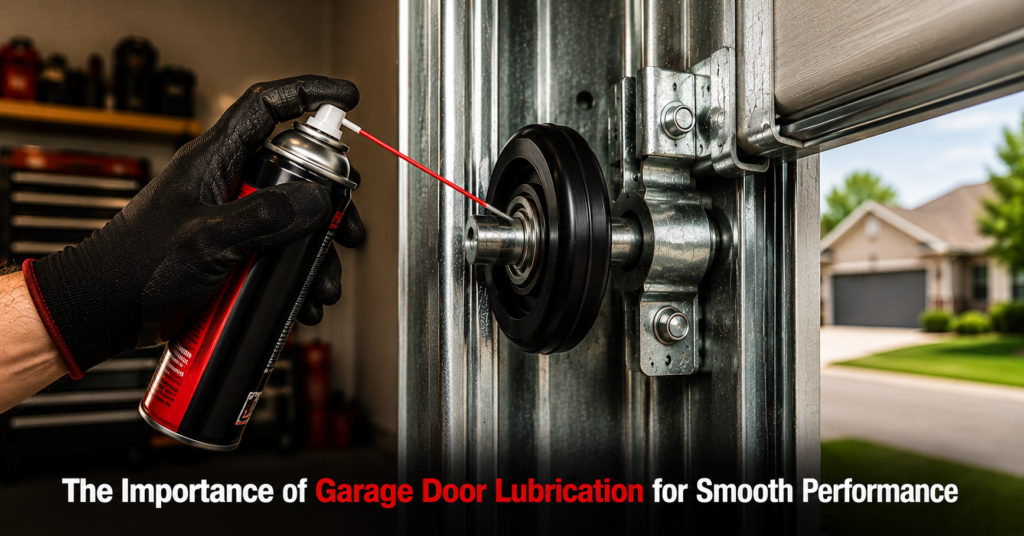
Rollers
The wheel portion, not the stem, benefits from lubrication that reduces friction as it moves through the track.
Hinges
The pivot points between panels should be lubricated so the door folds and unfolds smoothly as it travels.
Springs
A light coating helps torsion springs move with less resistance and can reduce the metal-on-metal friction that contributes to wear.
Tracks (Cleaning, Not Lubricating)
Tracks should be kept clean and free of debris, but they generally shouldn’t be heavily lubricated, since this can attract dirt and grime instead of helping.
Lock and Armbar
If your door has a manual lock or an opener armbar, a small amount of lubricant on the moving joints keeps these parts working smoothly too.
Quick Reference: What to Lubricate and What to Skip
| Part | Lubricate? | Product to Use |
|---|---|---|
| Rollers (wheel only) | Yes | Silicone-based spray |
| Hinges | Yes | Silicone-based spray |
| Springs | Yes, lightly | Silicone-based spray |
| Tracks | No | Clean only, no lubricant |
| Lock and armbar | Yes, sparingly | Silicone-based spray |
What Type of Lubricant Should You Use?
A silicone-based spray lubricant is the standard recommendation for garage door parts. It holds up well across temperature changes and doesn’t attract dust and dirt the way general-purpose oils like WD-40 tend to. Avoid grease-based products on rollers and hinges, since they can gum up over time and end up doing more harm than good.
How Often Should You Lubricate Your Garage Door?
Twice a year is a good baseline for most homes, ideally once before summer and once before winter. Doors that cycle more often, such as a primary household entrance, may benefit from lubrication every few months instead.
Common Mistakes Homeowners Make With Lubrication
- Using the wrong product. All-purpose oils attract dirt and don’t hold up as well as silicone-based lubricant.
- Over-lubricating the tracks. Tracks need cleaning more than lubrication, and excess product can attract grime.
- Skipping it entirely. Many homeowners never lubricate their garage door until something already sounds wrong.
- Only lubricating the loudest part. A full pass across rollers, hinges, and springs works better than spot-treating one noisy section.
- Applying it once and forgetting about it. Lubrication needs to be repeated regularly to stay effective.
Step-by-Step: How to Lubricate Your Garage Door Properly
- Open the door fully and disconnect the opener for safety.
- Wipe down the tracks to remove dirt and debris, without applying lubricant here.
- Apply a light coat of silicone-based lubricant to each roller wheel.
- Lubricate all hinges at the pivot points between panels.
- Apply a small amount to the springs, avoiding oversaturation.
- Run the door through a few cycles to work the lubricant in evenly.
- Wipe away any excess to prevent it from attracting dust.
Benefits of Regular Garage Door Lubrication
- Quieter, smoother operation
- Reduced strain on the opener motor
- Slower wear on rollers, hinges, and springs
- More consistent performance in cold weather
- Fewer unexpected repairs over time
When to Call a Professional
Lubrication itself is a safe, simple task for most homeowners. But if lubrication doesn’t resolve noise or resistance, the underlying issue may involve worn parts, spring tension, or track alignment, all of which should be evaluated by a trained technician.
Frequently Asked Questions
Can I use WD-40 on my garage door?
It’s not recommended as a long-term solution. WD-40 attracts dust and doesn’t hold up as well as a silicone-based lubricant designed for garage door hardware.
How do I know if my garage door needs lubrication?
Listen for grinding, squeaking, or rattling sounds, or watch for movement that feels rougher or slower than usual. These are common signs it’s time for a fresh application.
Should I lubricate the garage door tracks?
No. Tracks should be kept clean, but lubricant tends to attract dirt and grime here rather than help the door move more smoothly.
How often should garage door lubrication be done?
Twice a year works well for most homes, though doors used very frequently may benefit from more regular attention.
Can proper lubrication really extend my garage door’s lifespan?
Yes. Reducing friction lowers wear on rollers, hinges, and springs, and eases strain on the opener, which can meaningfully extend how long these parts last.
Contact Alba Garage Doors
If your garage door is making unusual noises, struggling to open, or needs professional repair or replacement, the team at Alba Garage Doors is here to help. We provide trusted garage door repair, garage door spring replacement, garage door opener repair, emergency garage door service, and garage door installation throughout Illinois.
Our experienced technicians proudly serve homeowners in Cary, Lake in the Hills, Algonquin, Schaumburg, Elgin, Libertyville, McHenry, Woodstock, Round Lake, Fox Lake, Antioch, Vernon Hills, Barrington, and many surrounding communities.
Call us today for fast and reliable garage door service.
Phone: (847) 596-0902
Website: www.albagaragedoors.com
Final Thoughts
Garage door lubrication is a small habit with an outsized effect. It keeps the door moving quietly and smoothly, reduces wear on the parts doing all the work, and takes pressure off the opener in the process. It’s one of the simplest ways to protect your investment without any major effort.
If your garage door has been sounding rougher or moving slower than usual, don’t overlook this simple fix. Reach out to Alba Garage Doors for an inspection, and see how much smoother your door can run.
Summary
Garage door lubrication reduces friction on rollers, hinges, and springs, resulting in quieter, smoother operation and less strain on the opener. A silicone-based lubricant applied twice a year helps prevent premature wear. Skipping it can lead to noise, stiffness in cold weather, and a shorter overall garage door lifespan.