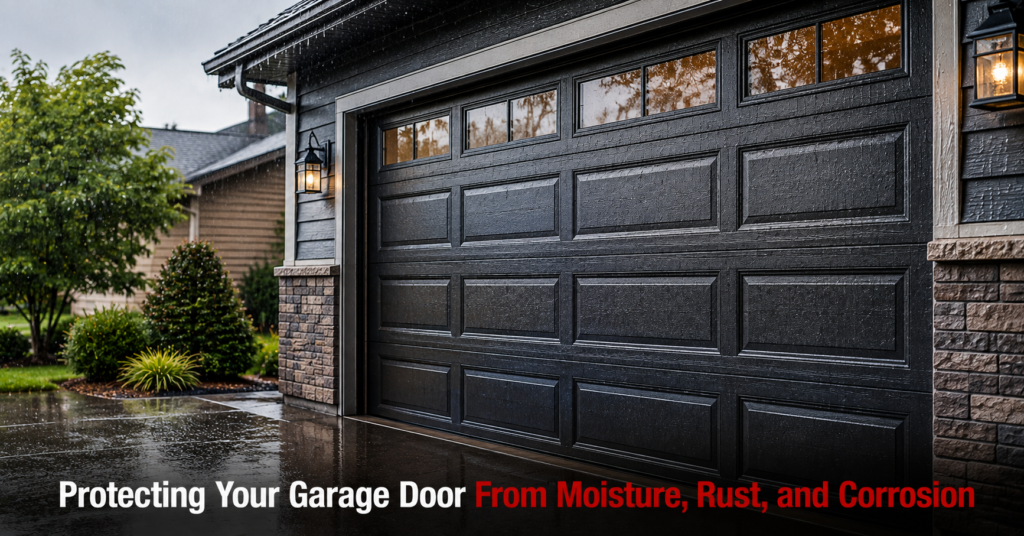
Illinois weather is tough on metal, and your garage door is no exception. Snowmelt, road salt, spring rain, and summer humidity all find their way into the parts your door depends on every day. Smart garage door rust protection starts with knowing where moisture collects and stopping it before a small spot of rust turns into a stuck door or a broken part.
At Alba Garage Doors, we help homeowners across the Chicagoland suburbs deal with exactly these problems. In this guide, you’ll learn what moisture does to a garage door, which parts are hit first, and the simple habits that keep your door moving smoothly through every season.
Why Moisture, Rust, and Corrosion Matter for Your Garage Door
Your garage door is a system of moving metal parts. Springs, tracks, hinges, rollers, and cables all work together, and they all depend on smooth, dry contact.
Moisture starts the problem. When water sits on bare metal, oxygen and time do the rest. Rust is the flaky, orange-brown layer that forms on iron and steel. Corrosion is the broader term for metal breaking down from moisture, salt, and chemicals. Both weaken parts and make them rub, stick, and wear out faster.
The result is a door that gets louder, slower, and less predictable. Ignore it long enough, and a small issue can become a full garage door repair call.
How Moisture Gets Into Your Garage
Moisture enters in more ways than most homeowners expect:
- Rain and snow blown or tracked in when the door opens
- Water running down the driveway toward the door
- Wet vehicles dripping meltwater and road salt onto the floor
- Humid air condensing on cold metal surfaces
- Poor airflow that traps dampness in a closed garage
Once moisture settles on metal, it tends to stay. Garages are often shut for hours at a time, so dampness lingers and rust has time to form.
Which Garage Door Parts Rust First?
Garage door springs carry the full weight of the door. Because they’re coiled tightly and always under tension, even light surface rust can make them wear unevenly. A rusty spring is more likely to squeak, bind, or snap without warning. Spring work is dangerous, so it should always be left to a trained technician.
Tracks, Rollers, and Hinges
Tracks guide the door, while rollers and hinges keep it moving. When moisture collects in the tracks, rust builds up and creates rough spots. Rollers then struggle to glide, and hinges can stiffen. You’ll usually hear this as grinding, scraping, or popping.
Cables and Fasteners
Lift cables and the bolts holding your door together sit in low, damp areas, especially near the bottom corners. Rust here is easy to miss but important. Frayed or corroded cables and loose, rusty hardware can throw your door out of balance.
Your Garage Door Opener
A garage door opener isn’t built to fight a door that’s binding from rust. When tracks and springs are corroded, the opener works harder, wears faster, and can stall or reverse unexpectedly. Damp conditions inside the garage can also affect the opener’s parts over time.
Why Illinois Homes Face Higher Risk
Illinois gives garage doors a full year of moisture challenges:
- Winter: Snow, ice, and road salt ride in on vehicles and settle near the bottom of the door and tracks. Salt speeds up corrosion.
- Spring: Heavy rain and melting snow bring standing water and dampness into the garage.
- Summer: Humidity lingers in closed garages and encourages surface rust.
- Fall: Wet leaves and debris collect in the tracks and hold moisture against metal.
Repeated freezing and thawing adds even more stress, which is why garage door temperature changes and moisture problems often show up together.
Warning Signs of Moisture and Rust Damage
- Orange, brown, or flaky spots on springs, tracks, hinges, or bolts
- Grinding, scraping, or squeaking when the door moves
- A door that shakes, jerks, or moves unevenly
- Slow or hesitant opening
- A garage door opener that strains or stops partway
- Visible dampness or water pooling near the bottom of the door
If you notice more than one of these, it’s time for a closer look.
How to Protect Your Garage Door From Moisture, Rust, and Corrosion
1. Inspect Your Door Regularly
Every few months, look over the springs, tracks, rollers, hinges, cables, and bolts. Catching early surface rust is far easier than dealing with a stuck door later.
2. Keep the Tracks and Bottom Area Clean and Dry
Wipe out dirt, leaves, and moisture. In winter, rinse away road salt that gathers near the bottom of the door, then dry the area afterward.
3. Lubricate Moving Parts Properly
Apply a lubricant made for garage doors to rollers, hinges, and springs. Lubrication reduces friction and helps keep moisture off bare metal. Keep the tracks clean rather than greasing them, since heavy grease attracts dirt.
4. Improve Airflow in the Garage
Trapped humidity encourages rust. Open the garage door briefly on dry days to let air circulate, and avoid storing wet items inside.
5. Address Small Rust Spots Early
Light surface rust on non-critical areas can often be cleaned and treated. Never try to treat, adjust, or replace springs or cables yourself. These are high-tension parts, and mistakes can cause serious injury.
6. Schedule Professional Maintenance
Regular, professional garage door maintenance lets a trained technician check spring condition, balance, alignment, and opener performance. They can also spot corrosion you can’t see from the floor.
Common Mistakes Homeowners Make
Ignoring light surface rust. Small spots spread when moisture keeps returning.
Over-greasing the tracks. Grease collects dirt and moisture, which leads to rough, noisy movement.
Skipping winter salt cleanup. Salt left near the bottom of the door speeds up corrosion.
Trying to fix springs or cables alone. These parts are under extreme tension and can cause serious injury.
Forcing a stuck door. A door that sticks from rust or ice can damage the opener, springs, and tracks if you force it.
Waiting for a breakdown. Rust damage rarely fixes itself, and it usually gets worse with each season.
Expert Advice From Alba Garage Doors
Our technicians recommend a simple routine: look, listen, and clean. Look for rust and dampness. Listen for new noises. Clean out the tracks and bottom area regularly.
Pair that routine with a yearly professional check, ideally before winter, so your springs, cables, and opener are ready for salt and snow.
When to Call for Garage Door Repair or Replacement
Call a professional if you see rust on springs or cables, hear grinding that won’t go away, or find the door uneven, stuck, or hard to open. Corroded parts often need garage door repair or replacement.
If rust is widespread and problems keep coming back, a new garage door installation may be the more reliable long-term fix.
Serving Homeowners Across the Chicagoland Suburbs
Alba Garage Doors provides garage door service throughout the region, including Huntley, Bartlett, Buffalo Grove, and Mundelein. Whether you need a spring inspection, an opener check, or repair for a rusted door, our technicians are ready to help.
Frequently Asked Questions
Can rust on a garage door be repaired?
Light surface rust on panels or hardware can often be cleaned and treated. Rust on springs or cables, or heavy corrosion on tracks, usually needs a technician’s attention.
What causes garage door springs to rust?
Moisture, humidity, and road salt settling on bare metal. Because springs are always under tension, rust can shorten their life.
How often should I inspect my garage door for rust?
Every few months, and always before winter and after spring rain. A yearly professional inspection is also a good idea.
Can moisture damage my garage door opener?
Yes. Dampness can affect internal parts, and a door that binds from rust makes the opener work harder.
Is it safe to remove rust from garage door springs myself?
No. Springs are under high tension. Have a trained technician inspect and service them.
Contact Alba Garage Doors
If your garage door is making unusual noises, struggling to open, or needs professional repair or replacement, the team at Alba Garage Doors is here to help. We provide trusted garage door repair, garage door spring replacement, garage door opener repair, emergency garage door service, and garage door installation throughout Illinois.
Our experienced technicians proudly serve homeowners in Cary, Lake in the Hills, Algonquin, Schaumburg, Elgin, Libertyville, McHenry, Round Lake, Fox Lake, Antioch, Vernon Hills, and many surrounding communities.
Call us today for fast and reliable garage door service.
Phone: (847) 596-0902
Website: www.albagaragedoors.com
Final Thoughts
Moisture, rust, and corrosion are quiet problems that build up over time, and Illinois weather gives them plenty of opportunity. The good news is that regular inspections, clean tracks, proper lubrication, and timely professional service go a long way.
With consistent garage door rust protection, your springs, tracks, and opener can keep working smoothly through every season. If you notice rust or rough operation, don’t wait. A quick garage door repair now can prevent a bigger problem later.
Summary
Protect your garage door from moisture, rust, and corrosion by inspecting springs, tracks, hinges, and cables regularly, keeping tracks clean and dry, lubricating moving parts, and rinsing away winter road salt. Schedule professional maintenance yearly, and never repair springs or cables yourself, since they are under dangerous tension.