Your garage door still opens. It still closes. But something about it just isn’t quite right. Maybe there’s a small gap at the bottom. Maybe you hear a faint scraping sound you didn’t notice before. Maybe one side seems to move just a little differently than the other.
These small details are easy to brush off, but they usually point to one thing: the door has drifted out of alignment. It’s one of the more common garage door issues, and also one of the easiest to miss until it turns into a bigger repair.
At Alba Garage Doors, alignment issues are something our technicians check on nearly every visit, since they’re often the root cause behind other problems homeowners call about. Here’s how to tell if your door needs realignment, what usually causes it, and what to do next.
What Does “Garage Door Realignment” Actually Mean?
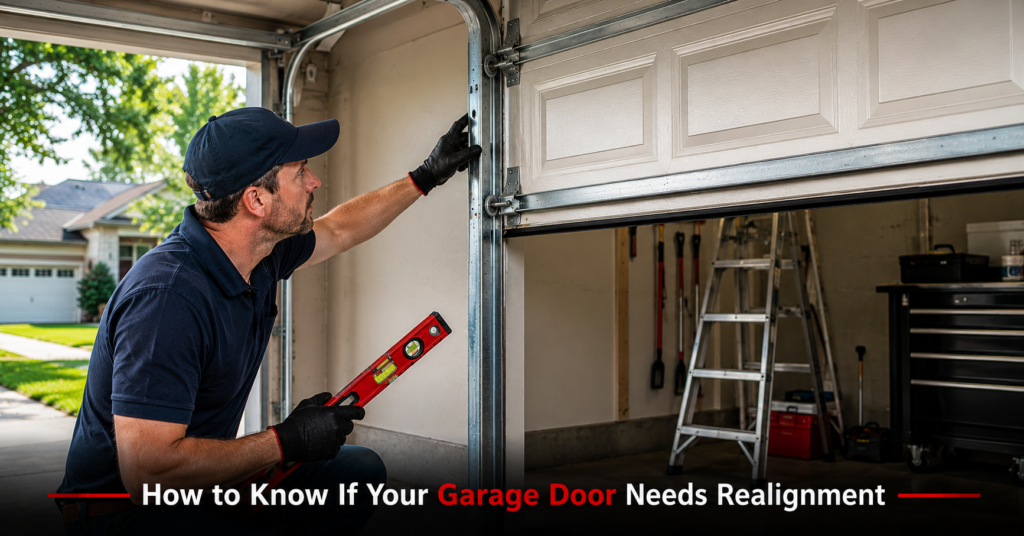
A garage door relies on tracks, rollers, and hardware that all need to line up precisely. When any part of that system shifts, even slightly, the door no longer travels the way it was designed to. This is called misalignment, and it can affect the tracks, the sensors, or both. Realignment simply means correcting that shift so the door moves smoothly and safely again.
8 Signs Your Garage Door Needs Realignment
1. Visible Gaps Between the Door and the Frame
Stand outside and look closely at where the door meets the frame when closed. A consistent gap on one side, or gaps that vary in size, usually means the door isn’t seated evenly, a classic sign of a track that’s shifted.
2. The Door Doesn’t Seal Evenly at the Bottom
Check the weatherstripping along the bottom of the door. If it presses firmly on one side but leaves a visible gap on the other, the door is likely closing at a slight angle instead of sitting flush.
3. Rubbing or Scraping Sounds During Operation
A door that’s properly aligned should move quietly. Scraping or rubbing sounds, especially ones that happen at the same point in the cycle, usually mean a roller or panel edge is catching against a track that’s out of position.
4. One Side Moves Faster Than the Other
Watch the door open or close all the way. If one side visibly lags behind or moves ahead of the other, the tracks on each side may no longer be perfectly parallel.
5. The Door Sticks or Catches at a Specific Point
A door that hesitates or catches at the same spot every single cycle is a strong sign of a localized alignment issue, often where a track has bent or pulled slightly away from the wall.
6. Increased Drafts or Light Coming Through the Sides
If you notice more cold air, noise, or even daylight coming through the edges of a closed door than before, it’s often because the door is no longer sitting evenly in its frame.
7. Rollers Look Worn on One Side More Than the Other
Take a look at the rollers on both sides of the door. Uneven wear, more wear on one side than the other, points to that side carrying extra friction from a track that’s slightly off.
8. The Safety Sensors Keep Losing Alignment
If your sensors need to be re-adjusted often, or the door keeps reversing unexpectedly, it can be a sign that the overall door structure has shifted enough to throw the sensors off too.
What Causes a Garage Door to Go Out of Alignment?
Several everyday things can gradually shift a garage door’s alignment:
- Minor impacts from a car, bike, or garage tools
- Loose mounting brackets that let a track drift over time
- Seasonal temperature swings that cause slight shifts in the garage structure
- Age and normal wear on hardware and rollers
- A door that’s been closing on debris or an obstruction repeatedly
Most of these develop slowly, which is exactly why alignment problems are so easy to miss until they become obvious.
Is It Safe to Use a Misaligned Garage Door?
For a short time, usually yes, but it’s not something to leave unaddressed. A misaligned door puts uneven strain on the opener, rollers, and hardware, and that extra strain tends to accelerate wear on everything connected to it. Left alone long enough, a minor alignment issue can lead to a roller failure, a bent track, or a door that comes off its path entirely.
DIY vs. Professional Realignment
Some early signs are safe to check yourself, like looking for visible gaps, listening for new sounds, or watching how evenly the door moves. But the actual realignment, adjusting tracks, brackets, or sensor position, should go to a trained technician. Tracks are connected to a system under constant spring tension, and adjusting them without the right approach can make the problem worse or create a safety risk.
How to Prevent Alignment Issues
- Have your garage door inspected annually, ideally before extreme summer or winter weather.
- Address any new noise or hesitation quickly, rather than waiting to see if it goes away.
- Keep the door’s path clear of tools, storage items, and clutter that could get bumped.
- Tighten visibly loose hardware as part of routine maintenance.
- Avoid forcing the door if it catches or resists partway through a cycle.
When to Call a Professional
If you’ve noticed gaps, uneven movement, new noises, or sensors that won’t stay calibrated, it’s time for a professional inspection. A technician can identify exactly which part of the system has shifted and correct it before it leads to a more expensive repair.
Serving Homeowners in Inverness, Lincolnshire, Long Grove, and Gilberts
Homeowners in Inverness, Lincolnshire, Long Grove, and Gilberts often notice these small alignment issues first as a draft, a sound, or a gap that wasn’t there before. A quick inspection usually confirms the cause and gets the door back to moving smoothly and sealing properly.
Frequently Asked Questions
How do I know if my garage door track is misaligned?
Look for visible gaps at the frame, uneven movement between the two sides, or scraping sounds during operation. These are the clearest signs of a track that’s shifted.
Can a misaligned garage door damage my opener?
Yes. A misaligned door forces the opener to work harder to compensate, which can shorten its lifespan over time if left unaddressed.
Is garage door realignment expensive?
It depends on the cause and how far the door has drifted out of alignment. Catching it early, when it’s a minor adjustment, is generally simpler than waiting until the tracks or rollers are visibly damaged.
Can I realign my garage door track myself?
It’s not recommended. Tracks are connected to a spring-tensioned system, and adjusting them without proper training can worsen the issue or create a safety hazard.
How often should I check my garage door’s alignment?
A quick visual check every few months is a good habit, along with a full professional inspection once a year.
Contact Alba Garage Doors
If your garage door is making unusual noises, struggling to open, or needs professional repair or replacement, the team at Alba Garage Doors is here to help. We provide trusted garage door repair, garage door spring replacement, garage door opener repair, emergency garage door service, and garage door installation throughout Illinois.
Our experienced technicians proudly serve homeowners in Cary, Lake in the Hills, Algonquin, Schaumburg, Elgin, Libertyville, McHenry, Woodstock, Round Lake, Fox Lake, Antioch, Vernon Hills, Barrington, and many surrounding communities.
Call us today for fast and reliable garage door service.
Phone: (847) 596-0902
Website: www.albagaragedoors.com
Final Thoughts
A garage door rarely goes from perfectly aligned to badly misaligned overnight. It happens gradually, through a gap that widens, a sound that gets a little louder, or a side that moves just a touch slower than the other. Catching these small signs early keeps the fix simple and affordable.
If any of this sounds like your garage door, don’t wait for it to get more obvious. Reach out to Alba Garage Doors for an inspection, and get your door back to moving evenly and sealing the way it should.
Summary
Signs your garage door needs realignment include visible gaps at the frame, uneven sealing at the bottom, scraping sounds, and rollers wearing unevenly. Misalignment usually stems from a shifted track or loose hardware, and should be corrected by a professional garage door repair technician to prevent further wear or damage.